
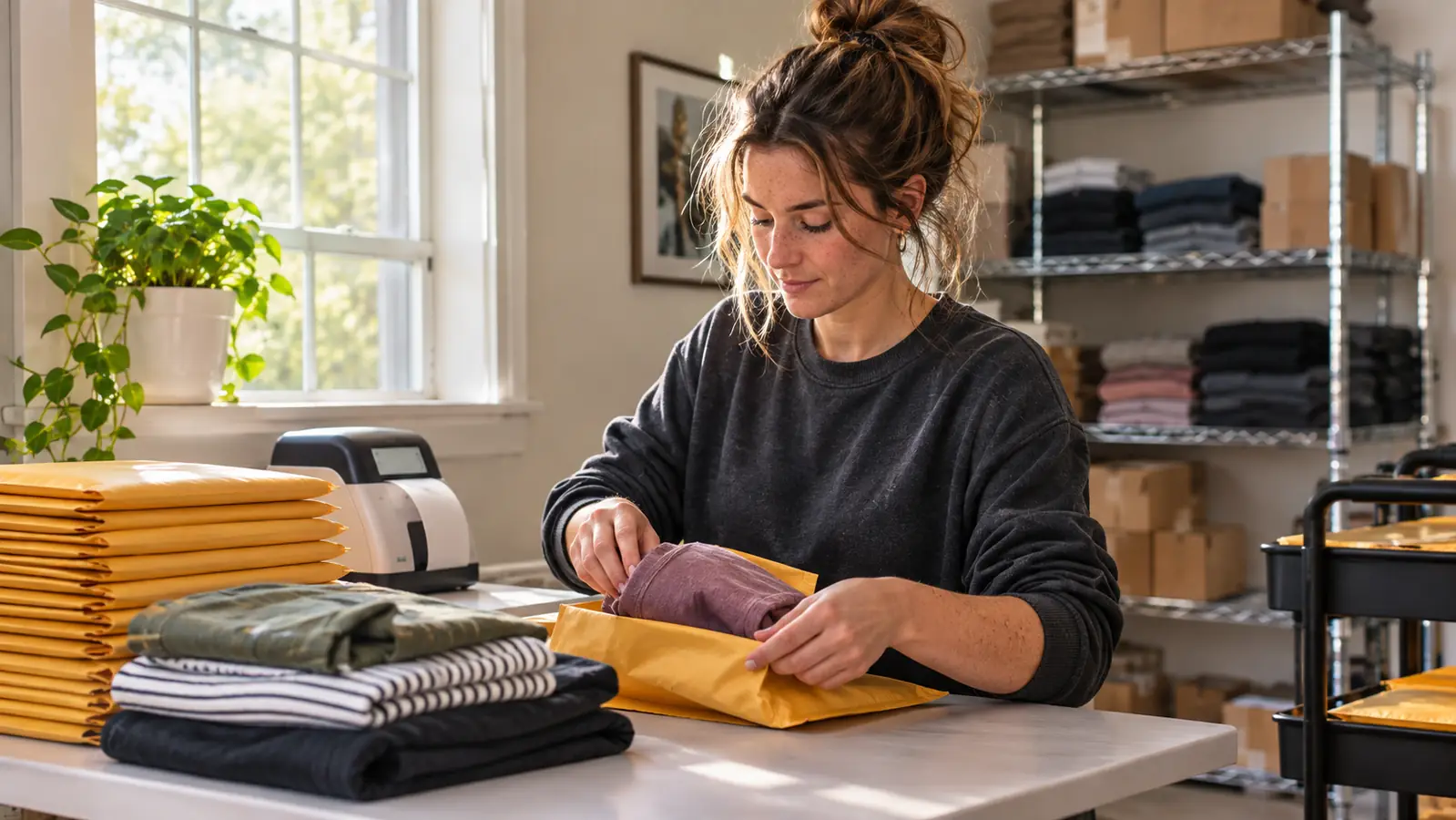
Every few weeks somebody in a reselling group asks whether bubble mailers or poly mailers are the right call, and the thread splits down the middle with people who have strong opinions and no returns data. Both are mailers. Both seal shut. Both ride in the same bin to the same sorting facility. The difference shows up in what the buyer finds when they cut the package open. I have sold thrifted clothing and housewares on eBay, Poshmark and Mercari for about six years out of the spare bedroom of my house in Dayton, Ohio, and there are two stacks of envelopes on the wire shelf beside my folding table. The Fuxury Bubble Mailers 12x15 are the padded ones I reach for when an item is small, breakable, or has a corner that can bend. The poly mailers take everything soft and flat.
Here is the short answer before the long one. If the item can crack, bend, or get scratched by another box in the truck, use a padded envelope. If the item is fabric, or anything that only needs to stay clean and dry, use a poly mailer. That one rule covers most of what I pack in a week. The rest is where the argument actually lives, and it comes down to a handful of specifics that most comparison posts skip right over.
| Fuxury Bubble Mailers 12x15 | Poly Mailers | |
|---|---|---|
| Cushioning | Padded bubble layer built into the envelope | None. Fabric and your own wrap are the only padding |
| Best for clothing | Works, but adds volume you do not need | Flattens to the shape of the garment |
| Small fragile items | Ceramics, jewelry boxes, glassware, frames | Needs wrap plus a rigid insert to be safe |
| Weight of the empty package | Heavier, because the bubble layer has mass | Lighter, which helps on soft goods |
| Storage before use | Holds air, so a 25 pack takes real shelf space | Lies flat in a drawer |
| Closure | Self-seal strip, no tape and no moisture needed | Self-seal strip on most, tape on some |
| Holds its shape in transit | Yes, so a small item stops sliding into corners | Collapses tight against the item |
| Cost per unit | Higher, you are paying for the padding | Lower when bought in bulk |
| Rain on the porch | Polyethylene shell keeps water out | Plastic film keeps water out |
| Reusing one that came back | Bubble layer flattens once it has been crushed | Often survives if the buyer opened it with care |
Where Fuxury Bubble Mailers Wins
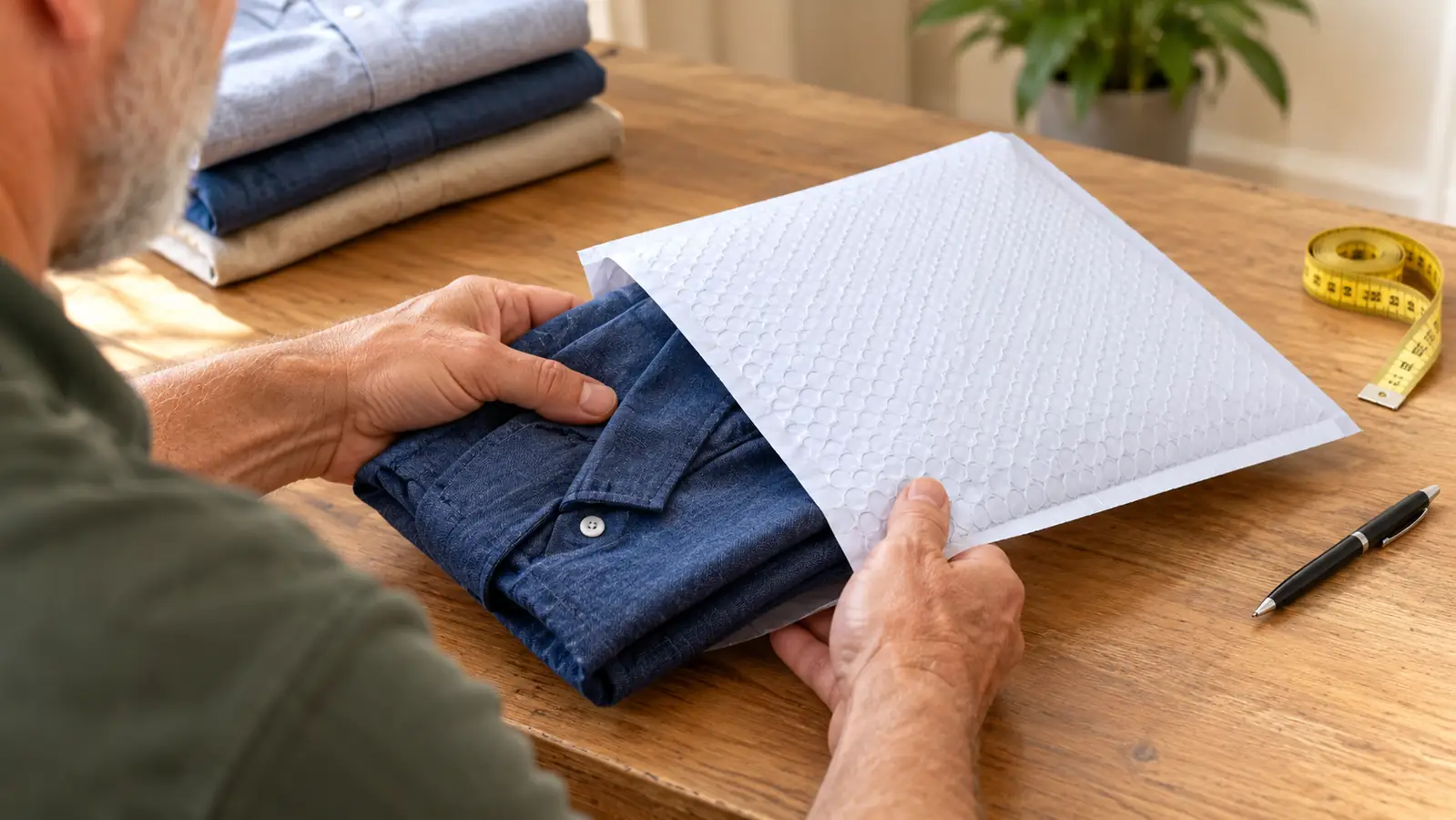
The Fuxury mailers win on one thing above everything else: the padding is built into the envelope, so it does not depend on me wrapping perfectly at seven in the morning. The cushion is already there. A small ceramic dish or a jewelry box goes in, the self-seal strip closes, and the bubble layer is doing the work from the outside. That is why these are the envelopes I use for glassware from estate sales, small figurines, picture frames, and anything with a lip or a corner that a conveyor can catch.
The padding buys a second kind of protection that people forget about. A padded envelope holds its shape, so a small item stays where I put it instead of sliding into a corner and taking the hit there. A bubble mailer sized right also means I stop layering tissue around the same dish every single time. Even the closure helps. The self-seal strip means no tape, no water dish, and no roll of tape that has gone missing under a pile of inventory. On a morning when I have fourteen orders to pack before Gary leaves for the post office, that is a real few minutes saved.
Where Poly Mailers Wins
Poly mailers beat the padded envelope on soft goods, and it is not close. A folded sweater, a dress, a pair of jeans, a bundle of shirts from an estate sale: all of it goes into a poly mailer faster and with less wasted volume. The mailer flattens down to the shape of the fabric instead of holding air around it. That means a smaller package, one that stacks neatly in my rolling cart and does not eat shelf space while it waits for a label.
Weight and cost per unit are the other two edges. Poly mailers are lighter empty and lower in unit cost, and across a year of shipping that difference is real money. Storage matters just as much and gets mentioned less. A hundred poly mailers lie flat in a drawer. A 25 pack of Fuxury bubble mailers takes genuine shelf space because the padding holds air and does not compress. In a spare bedroom where the wire shelving already carries all my inventory, that square foot is not free.
A poly mailer flattens to the shape of the fabric. A padded envelope keeps the shape I gave it, which is the whole point when the item inside has a corner.
If your inventory includes anything that can chip, keep this stack within reach
The 12x15 padded envelope swallows a jewelry box, a small ceramic, or a frame without a second layer of wrap. Inner space is 12x15, outer is 12x16, and the self-seal strip means no tape and no water dish.
Amazon Check Today's Price on Amazon →Where They Tie
Some of the differences people argue about are not differences at all. Both of these are plastic film over a polyethylene shell, so both keep rain out. I have had a poly mailer sit through a downpour on the porch with a dry shirt inside, and I have had the same experience with a padded envelope. Neither one survives a submerged mailbox, but for a normal rainy Tuesday in Ohio they behave the same way, and I have stopped factoring weather into the choice.
The other tie is the closure. The Fuxury mailers use a self-seal strip, and most poly mailers sold today do the same. Neither needs tape to close and neither needs a moisture strip. Both take a printed label the same way, and both fit the same drop box slot, which matters more than people admit. The slot is what decides whether I am standing in line at the counter on a Saturday morning or already back in the car.
How I Decide, Order by Order
The item gets wrapped or folded first, then the envelope gets picked. Never the other way around. I ask three questions in order. Can it crack? Can it bend? Can another box in the truck scratch it? One yes sends the item to the Fuxury stack. Three nos send it to the poly mailers. The order matters, because a quick look at a glass bud vase reads as small and light, and small and light is exactly how glass gets broken.
Clothing almost never fails that test. Neither do linens, curtains, or paperback books I have bagged first. Ceramics, glass, frames, jewelry boxes, small electronics, and anything with a decorative edge fail it every time. So does anything I have stiffened with a cardboard insert, because the insert turns a soft item into something with corners, and corners are exactly what a padded envelope protects.
One example from last month. An estate sale lot gave me six small stoneware ramekins, each about the size of a fist. Individually they are small enough that a poly mailer looks reasonable. Together they are a stack of hard edges, and every one would knock against the others inside a bag. Those went out in two padded envelopes, three each, with a sheet of tissue between the layers. The poly mailer never entered the conversation.
I also think about how the package opens. A poly mailer gets cut with scissors, and I have seen buyers slice into the garment while doing it. A padded envelope opens along the strip and the item is right there. For a necklace or a small gift, the padded envelope is the better last impression, and a five star rating that mentions careful packaging is worth more to me than the difference in unit cost.
Sizes, Sealing, and the Details That Bite You
The sizing on padded envelopes trips people up, so here is the number that matters. The Fuxury mailers are sold as 12x15, but the outer size is 12x16 and the inner usable space is 12x15. That extra inch is the sealing strip. Measure an item at exactly 12 by 15 and expect it to slide in, and it will not. Leave half an inch on each side or move up a size. I learned that with a stack of vintage postcards that matched the inner dimension exactly and then caught on the adhesive strip.
The closure is self-seal, so press it along the whole length and not just the middle. A strip pressed only in the center lifts at the ends during handling, and a lifted corner is how a padded envelope gets torn open in a sorting bin. I run my thumb from one end to the other twice, then press the corners down. It takes four seconds and I have never had one come open.
Poly mailers need the same attention for a different reason. There is no padding to absorb a bad seal, so the seal is the only thing holding the package together. Anything with real weight gets the top folded over once before sealing, or a strip of tape across the flap. That is not a knock on poly mailers. It is what a few returns taught me.
One more detail on weight. A padded envelope is heavier empty, and that weight goes on the label. For a single necklace it does not matter. For a combined order of ten items going to one buyer, it can tip the package into the next shipping tier. When I pack a combined order, the soft goods go into one poly mailer and the padded envelope is reserved for the pieces that actually need it, shipped separately. Ten items in one padded envelope is heavier than it needs to be and gives the buyer more to open.
What I Liked
- Padding is built in, so small fragile items need less wrapping
- Self-seal strip means no tape and no moisture strip
- Holds its shape in transit, so small items stop sliding into corners
- Inner space of 12x15 fits most jewelry boxes, small ceramics and frames
Where It Falls Short
- Takes more shelf space than a flat pack of poly mailers
- Higher cost per unit than a poly mailer
- Overkill for clothing and other soft goods
- The 12x15 figure is the inner size, the outer is 12x16, so measure carefully
The Mistakes I Made With Both
The worst one was a stoneware mug I sent in a poly mailer because it was small and I was in a hurry. I wrapped it in a dish towel, which felt like padding. It arrived in three pieces and I refunded the buyer the same afternoon. A dish towel is fabric. Fabric compresses to nothing under a stack of heavier boxes. A padded envelope would have cost me one more minute and saved the sale.
Getting it wrong in the other direction is just as easy. Early on I shipped a folded blouse in a 12x15 bubble mailer because I had run out of poly mailers. The buyer was fine with it, but I paid for volume I did not need and the package took up room in the cart all morning. Now I keep a pack of each on the shelf and I do not let either run out, because running out is when the bad decisions happen.
The third mistake was writing the address on the envelope with a marker and then laying the printed label over it. Do not do that. A label over a marker smear is how a package comes back to you three weeks later with a yellow sticker on it. Print the label, center it, keep it clear of the edges, and leave the seal strip alone.
Who Should Buy Which
Buy the Fuxury bubble mailers if you sell jewelry, small ceramics, glassware, frames, small electronics, or anything that survived a thrift store but might not survive a sorting facility. Buy them if you ship gifts and want the buyer to open the package without hunting for scissors. Buy them if you are tired of wrapping the same figurine in four layers of tissue and would rather the cushion came from the envelope itself.
Buy poly mailers if most of your inventory is clothing, linens, or bagged books. Buy them if storage is tight and you need envelopes that lie flat in a drawer. Buy them if you ship a steady volume of soft goods and want the lightest, simplest package you can seal and label. Most resellers I know keep both within arm's reach. I do, and after six years I would not go back to one.
If you are starting from nothing, buy a small pack of each. A 25 pack of the Fuxury 12x15 covers jewelry, small ceramics and gift sized items, and one pack of poly mailers in a couple of sizes covers the clothing. That combination will carry you through your first several months of orders without an emergency run to the store in the middle of a packing morning.
Two stacks on the shelf beats one, and this is the stack I run out of first
Poly mailers handle the clothing. The padded envelopes handle everything that can break, and they disappear fastest in a busy week. A 25 pack on the shelf is what keeps a Monday morning from turning into a repack.
Amazon Check Today's Price on Amazon →