

I stopped losing packages to damage claims the week I switched to Fuxury bubble mailers, and the story of how I got there is mostly a story about me being stubborn. For about six years I have shipped thrifted dishes, books and clothing out of the spare bedroom of my house in Dayton, and for most of that time I treated packaging as an afterthought. Whatever mailer was closest to my hand was the one that got used.
The mug was the first one. It came out of an estate sale box on a Saturday, a heavy stoneware piece with a glaze that a buyer on eBay had been hunting for. I wrapped it in two layers of tissue, dropped it in a plain poly mailer, taped the flap, and sent it off. Four days later she sent me a photo of a hairline crack running from the rim down to the handle. I refunded her, apologized twice, and threw the mug in the trash because there was nothing left worth relisting.
That was the first claim. It was not the last. Over the next six weeks I refunded three more, two cracked dishes and a hardcover that arrived with a bent corner, and every one of them went the same way. I packed it the way I had always packed things. The buyer opened a case with a photo. I paid to make it go away. Gary started calling those poly mailers my sorry envelopes, because that was usually the reason I was reaching for one.
So I tried the obvious fixes. Extra tape on every seam. Newspaper crumpled around the item. Reused shipping boxes cut down and folded to fit. All of it worked some of the time and none of it worked every time, and every bit of it added minutes to each package at my folding table. Packing ten orders before nine in the morning leaves no room for steps you have to remember, and remembering was exactly what I was bad at.
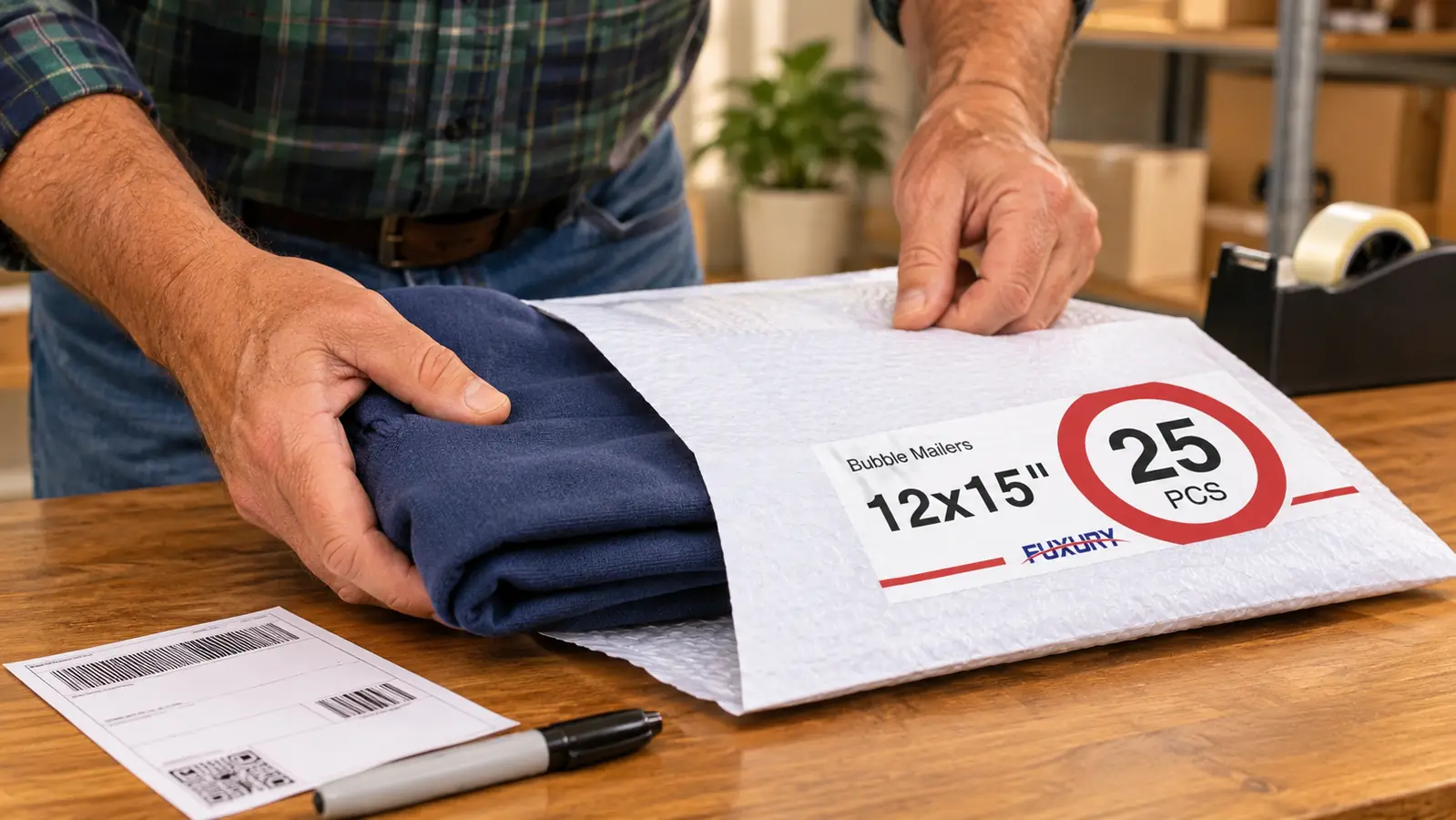
What I needed was a mailer with the padding built in, so the protection was not a separate thing I could forget. That is what sent me to Fuxury bubble mailers in the 12x15 size, 25 to a pack. The outer envelope measures 12 by 16 inches and the usable space inside is 12 by 15, so I knew before I ordered whether a folded sweater would fit. The material is polyethylene, the surface is padded, and the closure is self-seal. The first morning I used them I packed six packages in the time it used to take me to pack three.
The first morning I used them I packed six packages in the time it used to take me to pack three.
If your damage claims come from packaging you have to remember to add, remove the remembering
Fuxury bubble mailers, 12x15, 25 to a pack. Padded, self-seal, 12 by 16 outside with 12 by 15 of usable space inside. The protection is in the envelope instead of in your head.
Amazon Check Today's Price on Amazon →I have been shipping in them for a while now and the claim count has gone quiet. Not perfect quiet. I had one damaged item, a ceramic bowl in a corrugated box I packed too fast, and that one was mine to own. Every padded order since has landed without a photo of a crack in my inbox, and I have stopped bracing when I open my messages in the morning.
What fits, in practice: a folded sweater or two pairs of jeans. Three paperbacks stacked flat. A small dish wrapped in a single layer of tissue, since the bubble rows do most of the work the tissue used to do. What does not fit: anything rigid and heavy, or a boxed collectible that needs its corners protected. Those still go in a box with filler, and I stopped pretending otherwise.

Labels are the quiet benefit. The face of the envelope is flat enough that my printed label lies down without wrinkles or bubbles, and I stopped getting the scanner rejection at the post office counter. Gary noticed before I did, because he is the one standing in line with the rolling cart while I am still upstairs looking for my keys.
Storage got simpler too. The pack of 25 sits flat on the wire shelving next to my shipping scale, and I pull from the top instead of digging through a drawer. When something sells, I pack it and set it on the cart. When the cart fills, Gary carries it to the drop-off. That is the whole system, and it has not changed in months, which is the highest praise I can give a supply.
The honest tradeoff is that a bubble mailer is not a box and I do not treat it like one. Rigid, fragile, heavy, or anything with a corner I care about still gets corrugated. The difference is that everything else, which is most of what I sell, now goes out protected by default instead of protected by my memory on a Tuesday morning.
What I'd Tell You If We Were Sitting at My Kitchen Table
If you were across from me at my kitchen table with a pile of poly mailers and a roll of tape, here is what I would say. Decide the mailer before you decide the wrapping, because most of my damage claims came from the envelope and not from the tissue paper I fussed over. Keep one size on the shelf that fits the bulk of what you sell, and stop digging for the right one in the middle of a packing session. Then start with a pack of Fuxury 12x15 and let the padding do the job you have been doing by hand.
And do not talk yourself into believing good packing is a personality trait. It is a supply decision. I packed badly for years not because I was careless but because I was using envelopes with no padding in them and hoping. Buy the padded version before you have a claim, because the claim costs you the item, the shipping and the buyer's confidence all at once, and none of that comes back.
Pack your next ten orders in a padded mailer and see what stops happening
12x15 bubble mailers from Fuxury, self-seal, 25 to a pack, outer size 12 by 16. One pack on the shelf is enough to get you through a month of typical part-time volume.
Amazon Check Today's Price on Amazon →