
The parcel that taught me to buy a shipping scale came back to me three weeks after I mailed it. A stoneware bowl, double boxed, wrapped in two layers of bubble wrap, packed with crumpled newspaper so nothing shifted. The clerk at the counter weighed it, charged my buyer the difference, and he refused the package. The bowl came home. I refunded the sale, paid the postage twice, and set the box by the door for donation. I had guessed two pounds. The box weighed two pounds eleven ounces. Those eleven ounces cost me a sale, a buyer, and an afternoon I will not get back.
So I bought the ACCUTECK 8250 Digital Shipping Scale, and it has sat on the same folding table in my spare bedroom for a little over three years now. Two thousand labels have crossed it, give or take. This is the honest version of that review, which means it is not the version where the scale is wonderful and everything else is wonderful too. The ACCUTECK is a good tool with a few real irritations, and I want you to know about both before you spend anything.
The Quick Verdict
Reads to 0.1 oz, handles 50 lbs, and holds a number long enough to write it down. Buy it if shipping is a daily habit. Skip it if you mail two things a month.
Amazon Check Today's Price →The fix for the eleven ounces you guessed wrong
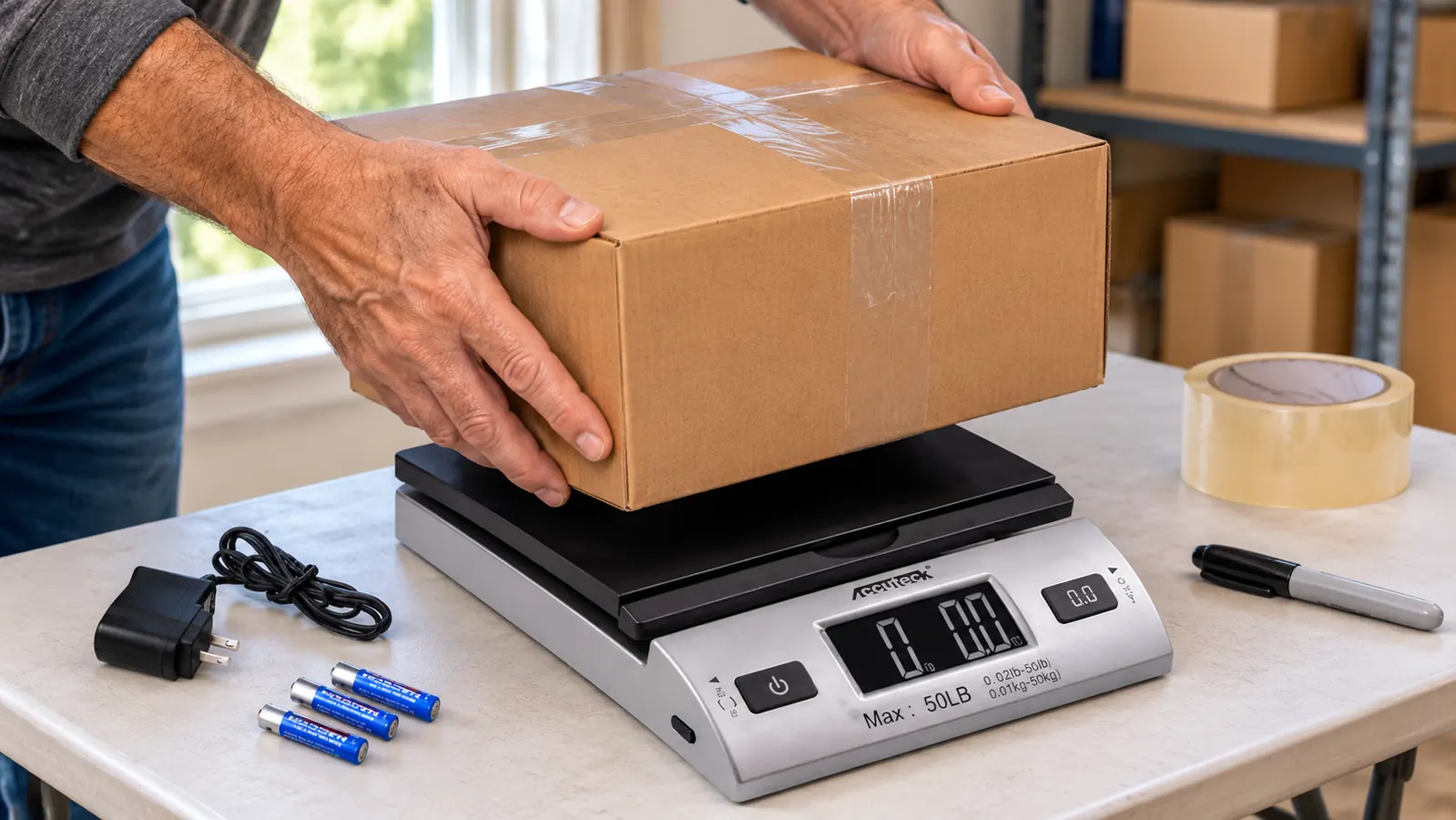
The ACCUTECK 8250 weighs up to 50 lbs to 0.1 oz, runs on the included AC adapter or AAA batteries, and shows the number on a backlit LCD. Check today's price on Amazon.
Amazon Check Today's Price on Amazon →How the ACCUTECK 8250 Fits Into a Real Packing Room
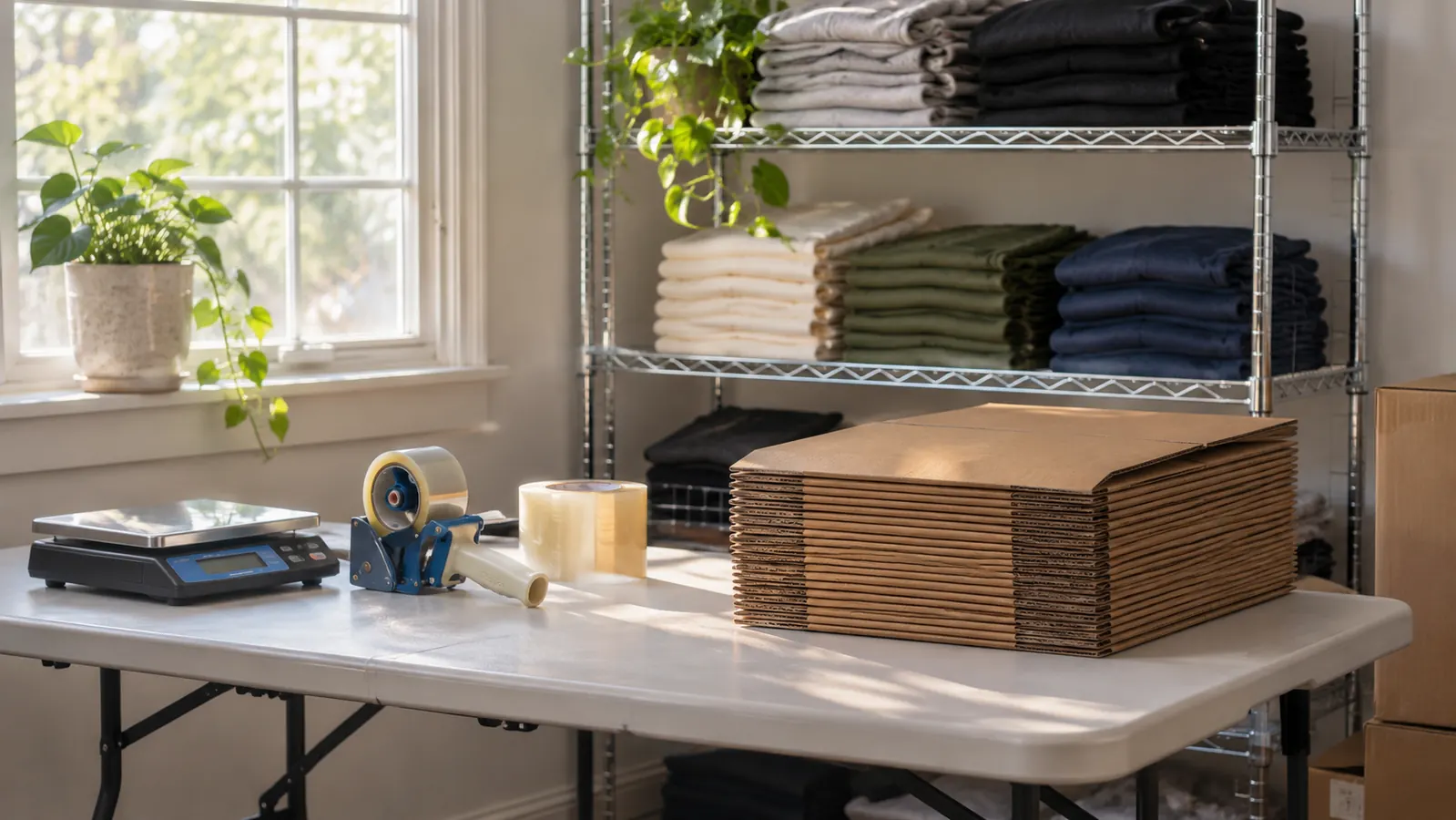
My packing room is the spare bedroom of a house in Dayton, Ohio. Folding table, wire shelving for inventory, a rolling cart for whatever goes out on a given morning. The scale lives at the left end of the table, next to the tape gun, because that is where my hand lands after I finish taping a box shut. I weigh it, I write the number on the flap in marker, and I type it into the label form. Three steps, same order, every time. A run of eight or ten packages takes me about forty minutes with the labels.
Before this one I used a kitchen scale that topped out at eleven pounds. Fine for a paperback, useless for a lamp. It also read in half ounces, so a two pound three ounce package could show as two pounds two and a half ounces, and if I was in a hurry I would round in whatever direction saved a few cents. The ACCUTECK reads in tenths of an ounce. The number I see is the number I type, and there is no room left for optimism.
The heaviest thing I have put on it was a boxed set of cast iron skillets, a little over thirty pounds. The display settled in about a second. The lightest was a single greeting card in a rigid mailer. Both of them came out the same at the post office counter, which is the only test that means anything to me.
How a Shipping Morning Actually Runs Now
The routine has not changed much in three years, which is rather the point. Coffee, lights on over the table, the cart rolled in from the hallway, the browser open to my orders. I work through the stack from lightest to heaviest, because the light ones go in the mailbox out front and the heavy ones go in the car for my husband Gary to carry to the drop off. The scale does not care what order I work in. I care, because a heavy box at the end of the run is a box I am not lifting twice.
What changed when the scale arrived was the number of passes. I used to pack everything, then weigh everything, then print labels, because the old routine assumed I would have to guess and adjust. Now the weighing happens inside the packing. Box taped, box weighed, number written, box on the cart. One pass instead of three, and no stack of finished parcels sitting around waiting for the label step.
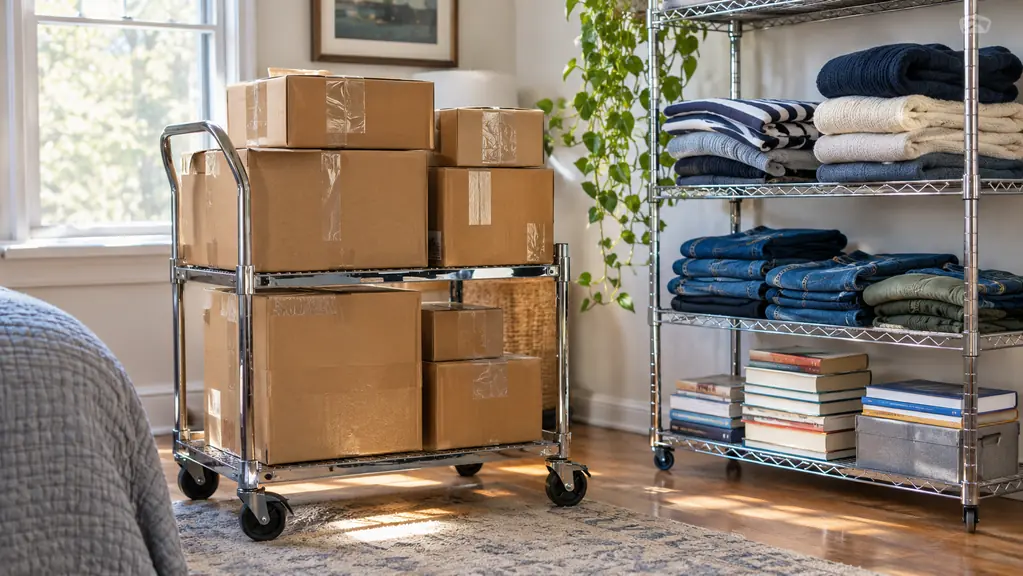
The other small change is on Gary's end. He carries a loaded cart out to the car instead of a teetering stack of loose boxes, because everything is weighed and taped before it leaves the table. Fewer trips down the hallway, fewer things dropped on the porch.
The Accuracy Claim, Tested the Only Way I Know How
The listing says accurate to 0.1 oz, with a readout accuracy of 2.86 grams. I do not own calibration weights and I am not going to pretend I ran a lab test in a spare bedroom. What I did instead, over one slow week in February, was re-weigh thirty packages that had already been accepted and scanned. Every one of them matched the number I had written on the box. In three years I have had exactly one postage due return, and it was the stoneware bowl, weighed on the old kitchen scale, months before the ACCUTECK arrived.
That is not a scientific result. It is the result that matters to someone running a small resale operation, which is whether the label you print gets the package delivered without a follow up charge. Clothing, books, and small housewares all sit comfortably inside the range where this scale is at its best. A heavy winter coat in a poly mailer runs about three pounds. A boxed hardcover is a pound and a half. You will not come close to the ceiling.
In three years I have had exactly one postage due return, and it was the box I weighed on the old kitchen scale.
The ceiling does matter for housewares. Fifty pounds is the limit and the scale will not pretend otherwise. If you sell cast iron, sewing machines, or boxed dish sets, weigh the heavy pieces on something built for the job and keep this one for everything under the line.
Where It Gets Annoying
The platform is not big enough for every box I ship. A deep carton overhangs the edges, and if you let go of it the reading drifts while you watch. This is where the hold function earns its place. You set the box down, wait for the number to settle, press hold, and the display keeps the reading while you lift the box off and write it on the flap. I ignored that button for the first six months. Now I use it every morning and I would not buy a scale without it.
The auto shut off is aggressive. If I get pulled away by a buyer message or a question from my husband, I come back to a blank display and I have to wake it up and start over. Small thing. Also a thing that happens two or three times a week, which is why I now write the number down before I do anything else with it.
The fold is there for storage and I have used it once, the week I brought the scale home, mostly to see whether it worked. With the adapter plugged in and the table set up permanently, folding it away just means unfolding it again the next morning. If your packing space has to become a guest room twice a year, you will feel differently about that. Mine does not.
What I Liked
- Reads to 0.1 oz, so the number on the box is the number on the label
- 50 lb capacity covers clothing, books, and most housewares
- Hold function locks a reading on cartons that overhang the platform
- Tare clears the weight of a tote or mailer with one press
- Backlit LCD is readable at six in the morning in a dim room
- Runs on the included AC adapter or AAA batteries, so it works away from an outlet
Where It Falls Short
- Small platform, so large cartons need the hold button
- Auto shut off kicks in faster than I would like
- The fold feature is pointless if your table stays set up
- Anything past fifty pounds needs a different scale entirely
The Buttons and the Power, Since Nobody Explains Them
There are two power options in the box, an AC adapter and AAA batteries, and I ran it on batteries for the first month because the outlet behind the shelving is awkward to reach. Battery life was fine but not endless, and eventually I ran an extension cord along the wall and plugged it in. If your table is nowhere near an outlet, the battery option is real rather than decorative.
Tare is the button I use most after hold. Set an empty tote on the platform, press tare, and the display zeroes. Load that tote with three items selling as a bundle and you get the weight of the goods without doing subtraction on a scrap of paper. For anyone who sells lots, that is most of the job right there.
The units button cycles through kilograms, pounds and ounces, and ounces alone. I keep it on pounds and ounces because that is what my label form wants. If you ship outside the country you may want kilograms, and it is one button press. No manual required, which is more than I can say for my label printer.
What I Tried Before and Why I Stayed
Before I settled on this one I borrowed a hanging luggage scale from my husband's toolbox. It was accurate enough and it was miserable to use, because a box swinging from a hook is a box you cannot tape shut at the same time. I also spent a stretch of months driving to the post office with unpacked boxes and weighing them at the counter before I sealed them, which worked and cost me an hour every trip. And yes, in one low moment I put a package on the bathroom scale and then weighed myself holding it, which is not a method I recommend to anybody.
I stayed with the ACCUTECK because of the combination rather than any single feature. It reads in tenths, it holds a reading, it clears a container with one button, and it runs off the wall. None of those is remarkable on its own. Together they mean I never stop in the middle of a packing run to solve a problem, and after a few thousand parcels that is the entire value of a tool.
What Three Years of Daily Use Has Done to It
The scale looks used. There is tape residue on one corner of the platform and a scuff where I dropped the tape gun on it. Nothing has cracked, nothing has stopped working, and the display is as easy to read as it was the day it arrived. I have not replaced the adapter or chased a loose connection. For a tool that lives on a working table and gets set down harder than it should, that is a fair run.
The one maintenance habit worth building is keeping the platform clean. A stuck label backing or a bit of packing tape will throw off a light package. I wipe it with a dry cloth every Sunday when I reset the inventory shelf, and I have not had a reading I could not explain since.
How I Would Set It Up If I Were Starting Over
Buy the scale before the label printer. That sounds backwards, since the printer is the louder and more exciting piece of equipment, but the scale is the step that stops the mistakes. My first winter I printed labels for guessed weights and adjusted them by hand at the counter, and I spent more time fixing labels than I would have spent weighing. Order of purchase, if it helps: tape gun, boxes and mailers in three sizes, scale, then printer.
Set it near an outlet and leave the adapter plugged in. Put it at the end of the table where your hand already goes, not in a cupboard. Keep a marker within reach so the number comes off the display and onto the box immediately. And read the hold instructions on the first day rather than the sixth month, because the overhanging carton problem has a solution and it is printed on a leaflet most people throw away.
One more thing. Weigh after taping, not before. Tape, label backing, and a folded over flap all add weight, and a half ounce of tape on a light item is enough to move you into the next ounce. It took me an embarrassingly long time to make that a habit.
Who This Is For
If you ship more than a handful of packages a week and the weights vary, this scale earns its place quickly, in avoided postage corrections and in the time you stop spending on the kitchen floor with a calculator. It suits clothing sellers, book sellers, and anyone moving housewares under fifty pounds. It suits a part time operation in a spare bedroom, which is exactly what mine is, and it would not look out of place in a small shop either.
It also suits anyone who has ever rounded down out of optimism. The display does not negotiate. Once you get used to typing exactly what you see, the guessing habit dies, and that is worth more than the scale costs.
Who Should Skip It
If you mail two or three envelopes a month, a cheap kitchen scale is genuinely enough and I would not argue with you. If your inventory runs heavy, meaning furniture, large speakers, boxed appliances, or anything past fifty pounds, this is the wrong tool and you want something with a bigger platform and a higher limit. If you need a scale that talks to your computer and fills in the label weight automatically, this one does not do that. It shows a number on a screen. You type it in yourself.
And if you are buying this because you think the equipment is the business, put it back on the shelf. A scale makes a careful packer faster and a careless packer slightly less careless. It does not find inventory, write listings, or answer buyer messages. It just stops you from guessing wrong about eleven ounces.
Stop guessing the weight and start typing what you see
50 lb capacity, 0.1 oz accuracy, hold and tare, backlit LCD, and both the AC adapter and AAA batteries in the box. Check today's price on the ACCUTECK 8250 at Amazon.
Amazon Check Today's Price on Amazon →