
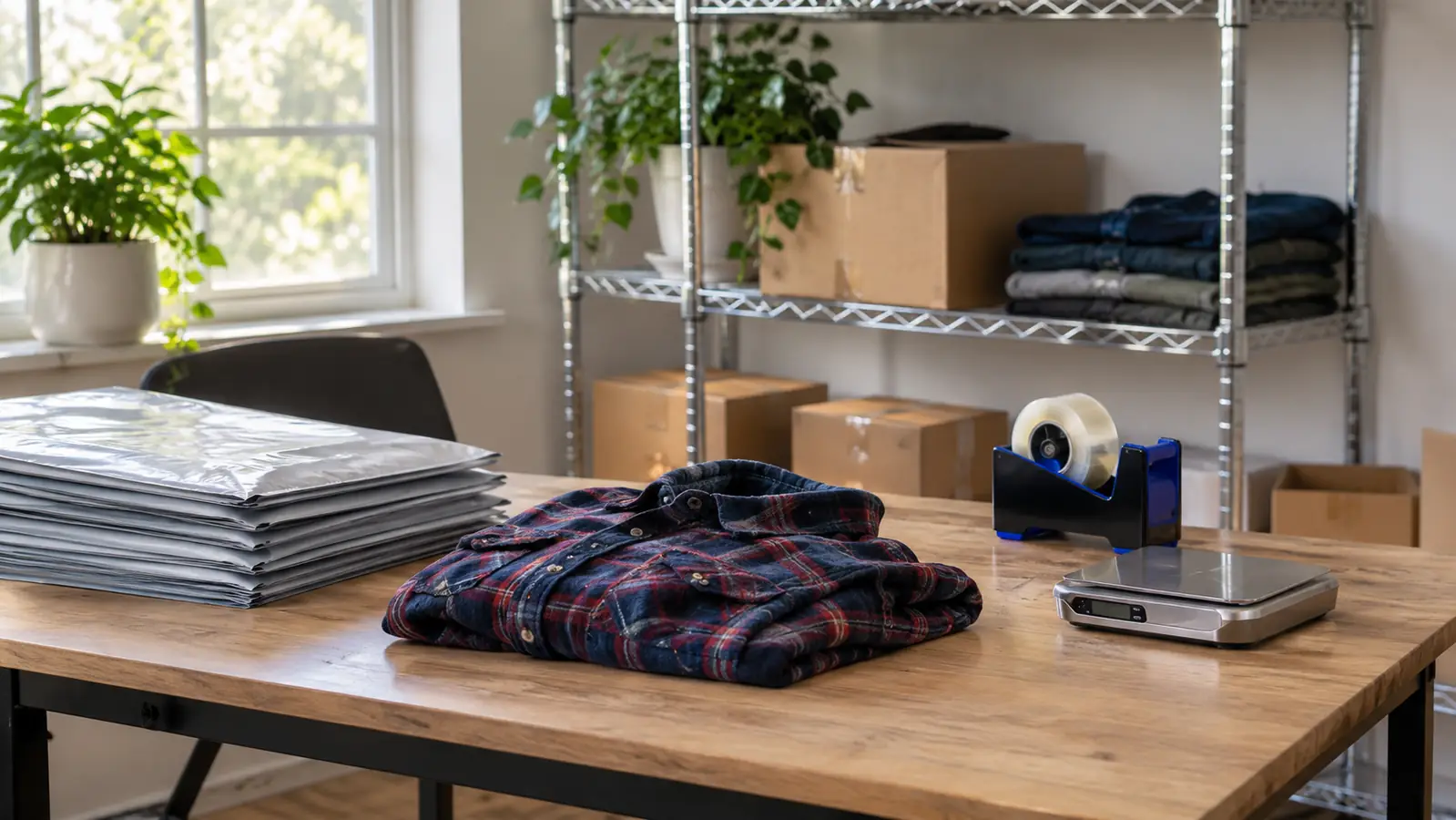
The seam on a poly mailer can fail quietly. I learned that on a Tuesday morning in March, at the folding table in my packing room, with a Poshmark order for a wool cardigan that had already been photographed, listed and paid for. I pressed the self-seal strip down with my thumb the way I always do, and heard the small ripping sound that means the adhesive is pulling away from the film instead of releasing from the liner. The bag was open again. The cardigan went back on the shelf, the buyer got an apology, and the order went out two days late.
That is the whole argument in one paragraph, and it is why there are two kinds of mailer in the spare bedroom now. METRONIC Poly Mailers 10x13 are the ones I reach for first, about nine orders out of ten. Fuxury earns its place in the drawer, but for a narrower set of jobs. If you want the short answer and nothing else, that is it.
How Two Brands Ended Up Side by Side
I did not set out to compare shipping bags. I set out to stop having to re-pack orders. I started reselling about six years ago after I retired from the school office, mostly thrifted clothing and housewares plus a shelf of books, on eBay and Poshmark with some Mercari mixed in. For the first year I shipped in whatever free box the thrift store handed me, which is how you end up mailing a stoneware mug in three pieces and learning that a box is not automatically safer than a bag.
The first case of poly mailers I bought was Fuxury, because it was the name that came up first and the count was right for someone who was not certain she would still be doing this in a year. At the time I was averaging about fifteen orders a week, so a case of 100 lasted a little under two months, and I reordered three times before I ever thought about the brand itself. They lived on the lower shelf of the wire rack and I never once had to reach for a second bag because a strip had failed.
Then a restock came in and I added a case of METRONIC to the order, and I noticed the difference at the table before I noticed it in the mail, which is how it usually goes with supplies.
Both bags are 10x13. Both have a self-seal strip. Both come in a case of 100 at the size I use most, which is the workhorse size for folded clothing and small housewares. Past that they behave differently enough that I stopped treating them as interchangeable, and that is what this comparison is about. Not a lab test, just a folding table and a stack of orders.
My method is not scientific. It is the same bag going through the same four steps: fold, bag, seal, label. I judge a bag on whether it survives the ride out to the post office in the rolling cart, whether the strip holds when it is compressed under three other packages, and whether I have to think about it again. That has been enough to sort out which supplies I restock and which ones sit in the drawer until spring cleaning.
The Comparison at a Glance
| METRONIC Poly Mailers 10x13 | Fuxury Poly Mailers | |
|---|---|---|
| Size and count | 10x13 inches, 100 per case | 10x13 inches, sold in comparable counts |
| Closure | Self-seal adhesive strip with a tamper resistant bond | Self-seal adhesive strip |
| Water resistance | Film is stated waterproof; a bag sat through an afternoon of steady rain on my porch and the shirt inside stayed dry | Not something I have deliberately put to the test |
| Tear resistance | Stated tear resistant; corners have come through the sorting machinery without splitting | Lighter film, and I tape the corners on anything with an edge |
| Privacy | Opaque enough that the shape of a hardback does not read through | Fine in normal handling, though the lighter film makes me check the corners |
| Books, mugs and anything with an edge | The heavier film holds its shape around a squared item | Better saved for soft goods |
| Soft goods and odd shapes | Works, but my film does not want to curve and it creases at the fold | The softer film folds around a rolled scarf cleanly on the first try |
| How it handles in the hand | Feels heavier, and takes a firm thumb press to seat the strip | Feels lighter and goes down smoothly with very little pressure |
| Bulk on the shelf | A 100 count stack takes real shelf space in a small room | Stores flatter, easy to keep a spare stack in a drawer |
Where METRONIC Wins
The listing makes three claims I can actually check: the film is waterproof, it is tear resistant, and the self-seal strip is tamper resistant. Six years of Ohio weather has tested the first one for me. Last October I left a bag on the front porch for most of an afternoon because I misread a pickup time, and it sat through steady rain. The flannel shirt inside was dry when I opened it, and the label was the only thing that needed reprinting. The order that convinced me, though, was a two pound hardback cookbook headed to a buyer in Arizona. I wrapped the corners in one layer of bubble wrap, bagged it, and the book arrived square. The bag came back in the buyer's photo with a scuff across one side and nothing else. I still have that photo saved.
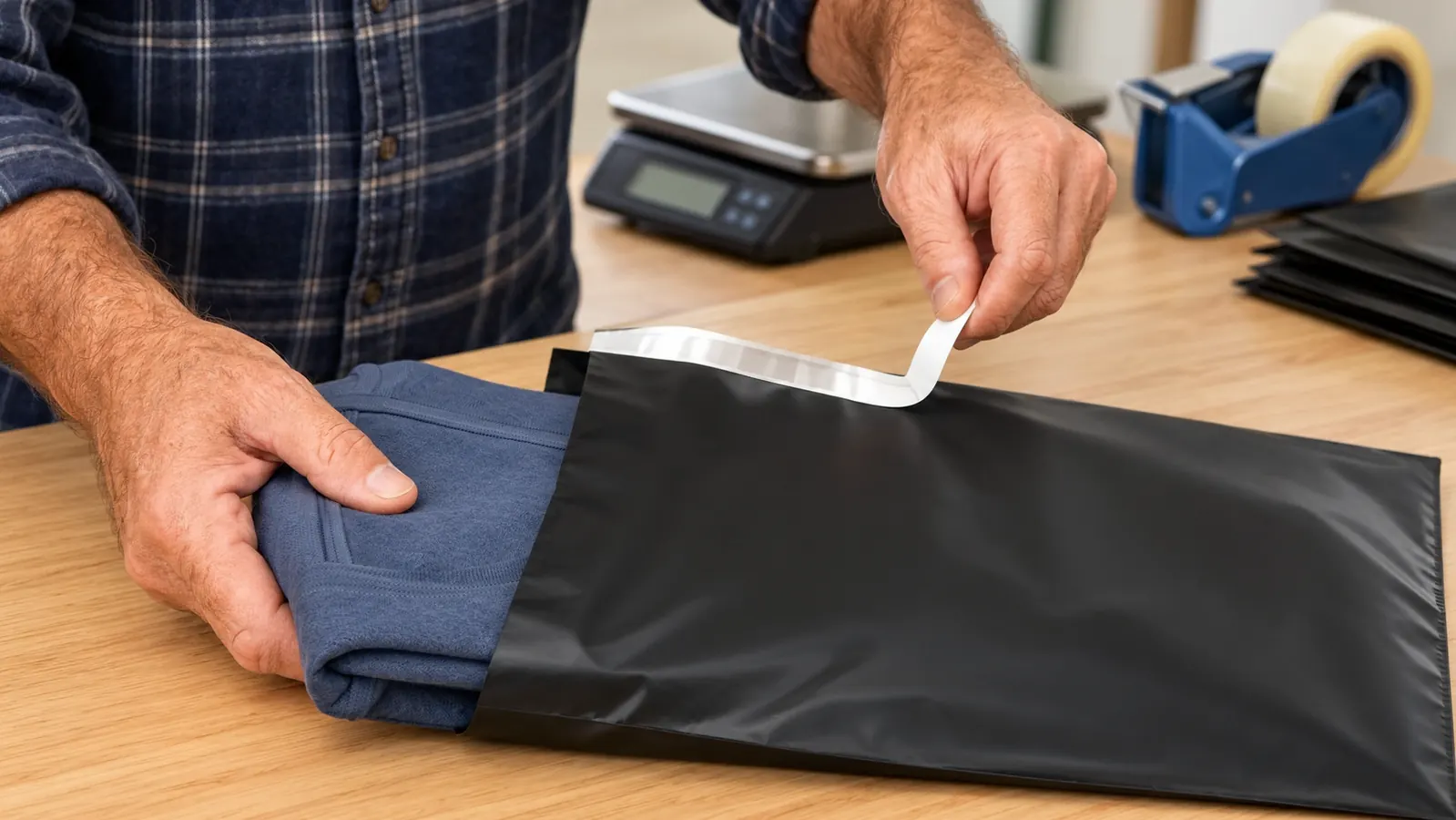
The second thing is privacy. A poly bag is not gift wrap, it is a wrapper, and what matters is that the shape and texture of what is inside does not announce itself. These bags are opaque enough that a hardback does not read through and a folded pair of jeans does not show a seam line, which matters on a platform where a buyer photographs the package before opening it. The adhesive strip is the part I care about most. It grabs on the first press and it stays grabbed. Because it is meant to show if it has been opened, it is not meant to be lifted and re-seated, so I have learned to fold first, look at the fold, and only then peel the liner. If I peel first I end up fighting the liner with one hand and holding a shirt with the other, and that is how bags get creased.
Nine orders out of ten leave this house in a METRONIC bag. The tenth has an edge on it, and that one goes in a box.
Where Fuxury Wins
The Fuxury bags are softer in the hand, and I do not have a number for that, only the stack on the shelf and the way each one behaves at the table. That softness is a real advantage on anything round or rolled. A rolled scarf, a knit hat, a folded sweater that will not sit square, all of those go into a softer bag more cleanly on the first attempt. With the heavier film I end up pressing a crease flat with the side of my hand before the strip goes down, and on a busy morning that is an extra step on every single order.
The other advantage is storage. My packing room is the spare bedroom, so it is a folding table, wire shelving and a rolling cart, and shelf space is genuinely limited. A hundred softer bags compress into a smaller stack and slide into a drawer, which is where mine live. If you ship light soft goods, if your orders are mostly shirts and scarves, and if you want the bag to disappear into the transaction, this one does that job without complaint. I have not had one split on me. I just do not ask it to carry a mug.
The bag that goes out nine orders out of ten
10x13, 100 per case, with a self-seal strip that holds on the first press. This is the one on the shelf within reach of my folding table.
Amazon Check Today's Price on Amazon →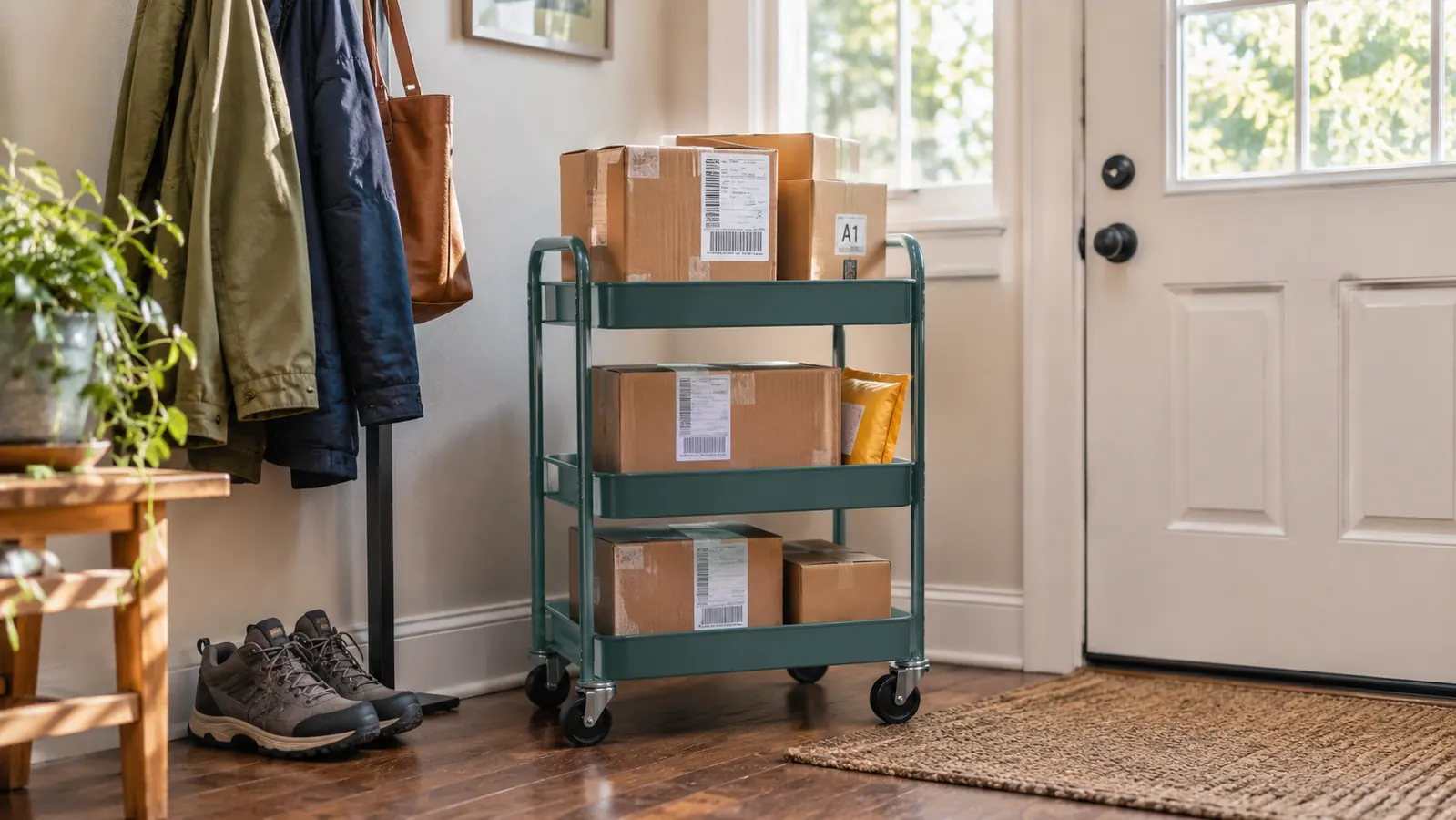
The Seam Is Where a Bag Fails
Almost every mailer failure I have had came from the same three places: the seam, the corner, and the strip. None of them failed because the bag was the wrong brand. They failed because the bag was asked to do something it was not built for. The worst one was a stoneware bowl I mailed two Octobers ago. It fit the bag, so I bagged it, and I skipped the bubble wrap because the bowl was small and I was in a hurry. The buyer sent a photo of three pieces. I sent a replacement in a box with paper packed around it, and the bag took no blame for that one. I did.
What I do now, with either brand: fold the item so the bulk sits in the middle and there is at least an inch of flat film on all four sides, press the strip from the center outward, then run my thumb along the seam once more after it is closed. For a book or a picture frame I wrap the item first and tape the film at the corners. It takes about forty extra seconds and it has cut my repack rate down to almost nothing.
That tamper resistant strip is worth understanding before you buy a case of anything. It is designed to show if the bag has been opened, which means it is not designed to be opened and closed twice. If you mis-fold an item, you are reaching for a second bag. I keep a short stack of seconds on the shelf for exactly that reason. I would rather lose one bag than send an order out with a strip that has already been lifted and pressed back down.
What Actually Fits in a 10x13 Bag
A 10x13 bag is bigger than people think and smaller than they hope. I keep a wooden ruler taped to the edge of the folding table, mostly because I got tired of guessing. A men's flannel folded in thirds and then in half lands around nine by eleven, which leaves an inch and a half of flat film on each side. A pair of jeans folded the same way comes in close to ten by twelve, and that is about the practical ceiling before the film pulls tight at the corners. What does not go in: a hardback taller than the bag, a pair of boots, anything still in its retail box, and anything glass. Those get a box and paper, and Gary carries them to the drop-off because a box of books is heavier than it looks.
Labels go on the front, centered, with the top edge about an inch below the seal. If you put a label across the strip you cannot see whether the seal is clean, and the label itself can lift a corner of the film when it is peeled at the counter. Small habit. It has saved me more than one reship.
The thing that saves the most time is consistency. Same fold, same amount of headroom at the top, same thumb press on the strip. When every bag is closed the same way you stop thinking about it, and the order that goes out at seven in the morning is packed as well as the one you fussed over at noon.
What I Liked
- Self-seal strip grabs on the first press and stays put
- Film is stated waterproof and shrugged off a rainy afternoon on the porch
- Tear resistant corners have come through the sorting machinery intact
- Opaque enough that contents do not read through
- 100 per case covers a lot of clothing orders
Where It Falls Short
- The heavier film does not want to curve, so rolled and round items crease at the fold
- Once the tamper resistant strip is down it is down, so a mis-fold costs a bag
- It is not armor, and anything with a hard edge still needs bubble wrap
- Soft goods go in more cleanly in a softer bag
Who Should Buy Which
Buy the METRONIC case first if you are only buying one. It covers clothing, books, small housewares and the odd padded envelope, which is most of what a part time reseller ships in a week. It is the better choice if you have already had a bag arrive open, if you ship anything with a corner on it, or if you are packing in the morning before you are properly awake and want a strip that forgives you. Nine orders out of ten in this house leave in one of these.
Buy Fuxury if your inventory is soft goods and only soft goods, or if you are still deciding whether reselling is going to stick and you want a bag that stores flat and wraps a scarf without a fight. I would not talk you out of it. I would just tell you to keep a small stack of something heavier on the shelf for the day a stoneware mug turns up in your thrift haul, because that day comes.
Start with the bag that handles the awkward orders
10x13 poly mailers, 100 per case, self-seal and tamper resistant. The one I restock first and the one I hand to friends who are just starting out.
Amazon Check Today's Price on Amazon →