
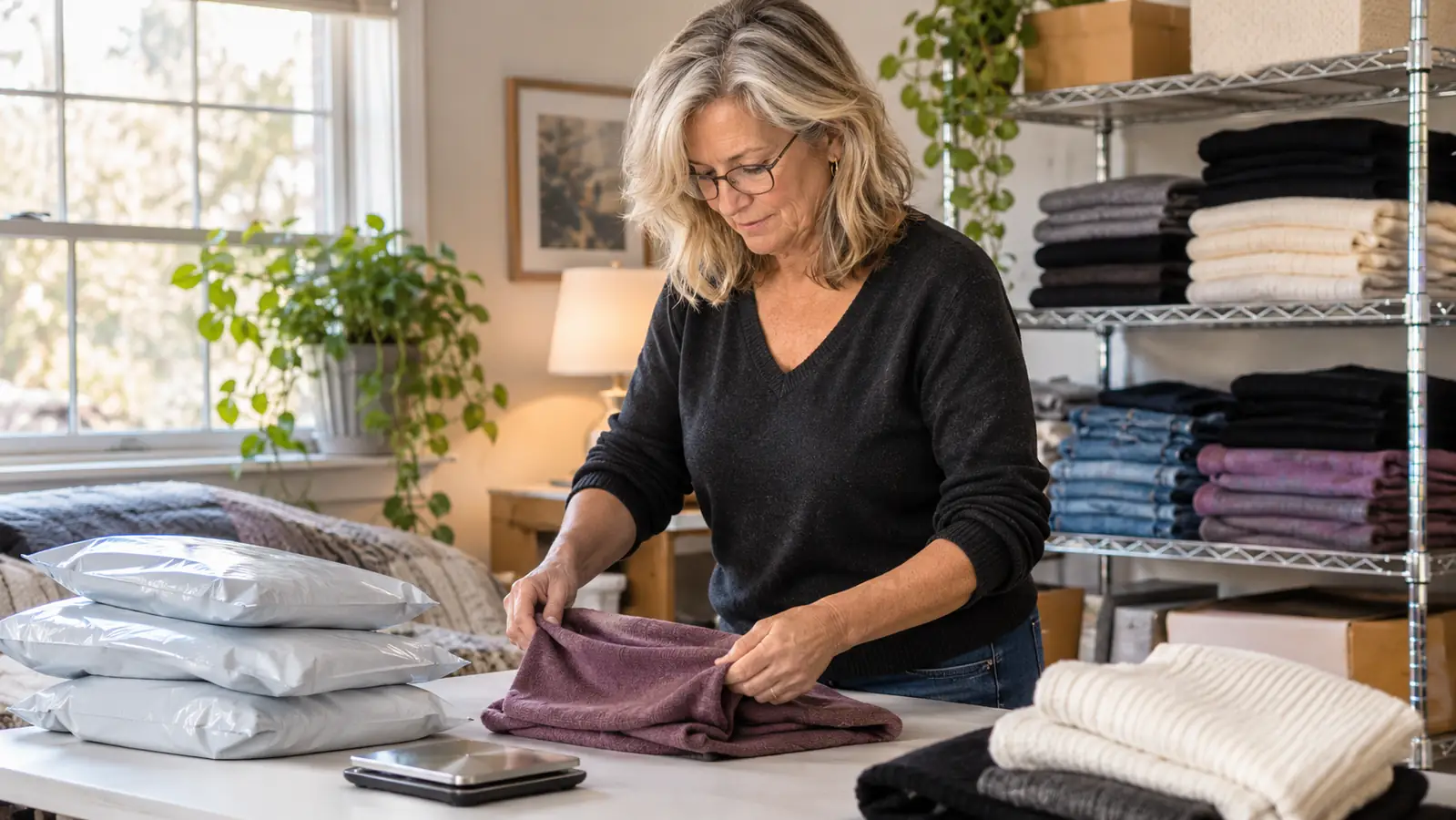
For my first two years selling clothing on eBay and Poshmark, every order went out in a box. A shirt went into a box, the box got tape on all four seams and a strip down the middle, and the whole parcel weighed enough that I started rounding up on my kitchen scale to be safe. Then I ran out of boxes on a Tuesday morning with eleven orders to get out the door, and I packed all of them in METRONIC poly mailers instead. I have not bought a shipping box for clothing since. What follows is not a commercial for bags. It is the list of things that actually changed in my packing room, including the two places I still reach for cardboard.
The room is the spare bedroom, and it is small: a folding table, wire shelving for inventory, and a rolling cart that collects the outgoing orders by the door. Anything that eats floor space or shelf space costs me something real. Anything that saves me a minute on a Monday morning costs me something real in the other direction. That is the lens I looked at the METRONIC 10x13 mailers through, and it is the lens I would suggest you use before you buy a case of anything.
The 10x13 mailer that emptied my shipping box shelf
100 self sealing mailing envelopes, 10x13 inches, waterproof polyethylene. This is what clothing orders leave my house in most mornings of the week.
Amazon Check Today's Price on Amazon →A folded shirt is sealed and out the door in a minute flat
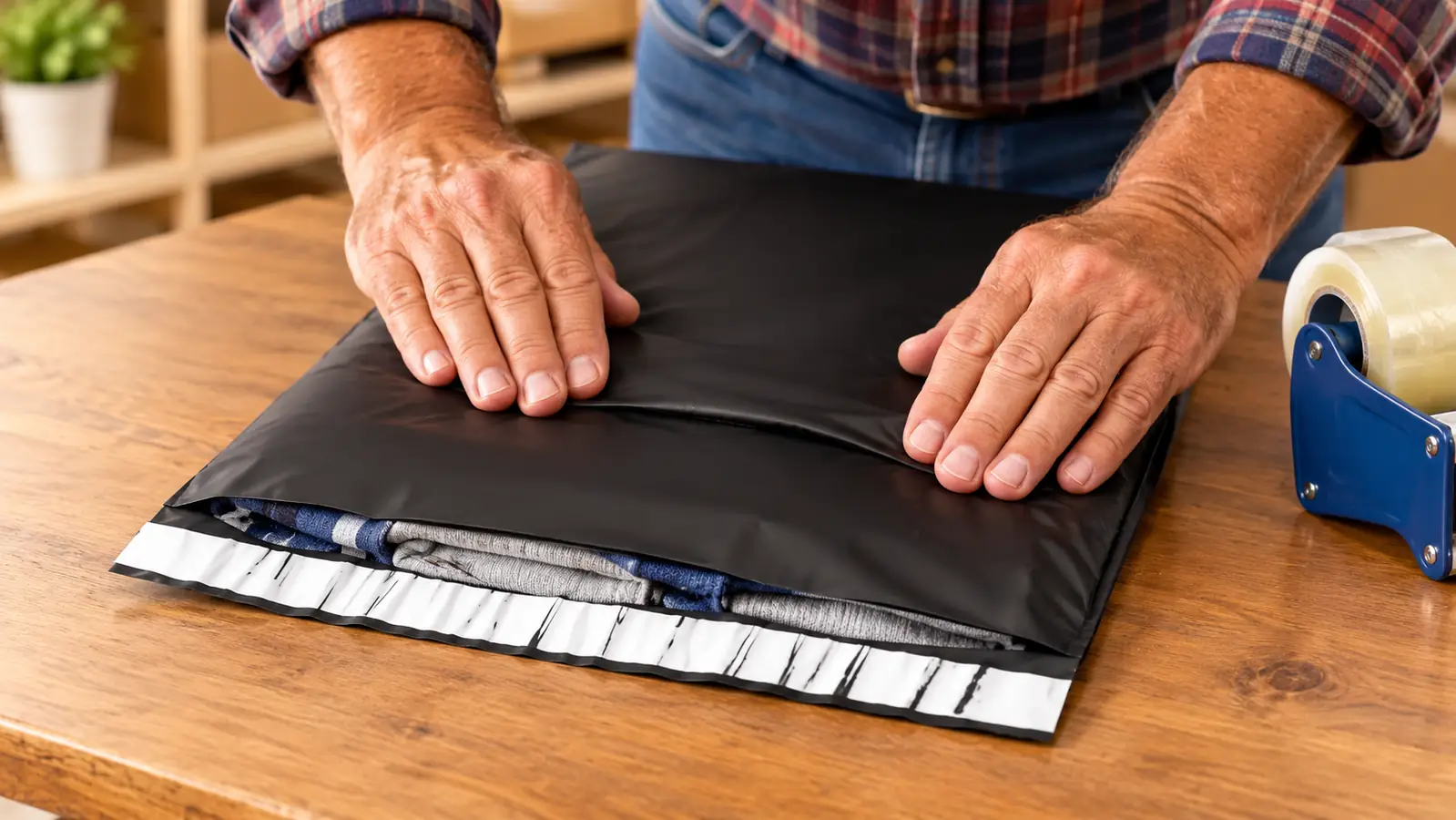
The closure on these is a real adhesive strip, not the peel and hope kind. Fold the shirt, slide it in, pull the liner, press the flap down with the flat of your hand, and you are done. No tape gun, no scissors, no hunting for the end of the roll that stuck to itself again. When I timed a ten order morning, the packing part took about eight minutes. In boxes, with tape on every seam, ten clothing orders ran closer to half an hour. That is the time I now spend listing.
Ten by thirteen inches swallows a folded sweater without a fight
METRONIC lists these at 10x13 inches, and that is the size my hand reaches for first. A men's large flannel folded in thirds, a pair of jeans rolled once, a women's medium dress folded twice, all of them sit inside with room left at the flap. I do not have to compress anything or sit on the package to get it shut. If a garment genuinely will not fold flat enough to go in, that is useful information. It means it was never a mailer order.
The parcel weighs almost nothing, so my scale stops arguing with me
Polyethylene is light. A box plus tape plus filler adds ounces you are guessing at, and guessing is how you end up with a weight dispute or a package that arrives postage due. With a mailer, the clothing is basically the entire weight of the parcel. I set it on the kitchen scale, read the number, buy the label, and stop second guessing myself. Fewer correction trips to the counter is not a dramatic win. It is a quiet one that repeats every single week.
Waterproof matters on a Dayton porch in April
These are waterproof polyethylene with a self sealing closure. That does not make them indestructible, and I am not going to pretend it does. What it means is that a package sitting on a wet porch for an hour while a buyer is still at work will not soak through to a sweater the way cardboard does. Cardboard wicks. It goes soft, it sags, and by the time the buyer picks it up the corner has given way. I have replaced one clothing order for water damage since I switched. Before, it was a spring tradition.
A bag that was opened and pressed shut again looks like one
The adhesive strip is tamper resistant. If someone peels the flap up and presses it back down, it does not lie flat and clean again. That is not a security system, but it is an honest signal, and I like sending one. On the other side of it, I have not had a buyer claim a clothing package arrived open since I switched. The flap is the strongest part of the bag. It is the middle and the corners you have to think about, which is the next item.
The thing that sold me was not the speed. It was that I stopped guessing at package weight, and guessing was costing me more than I realized.
A hundred of them slide under the folding table
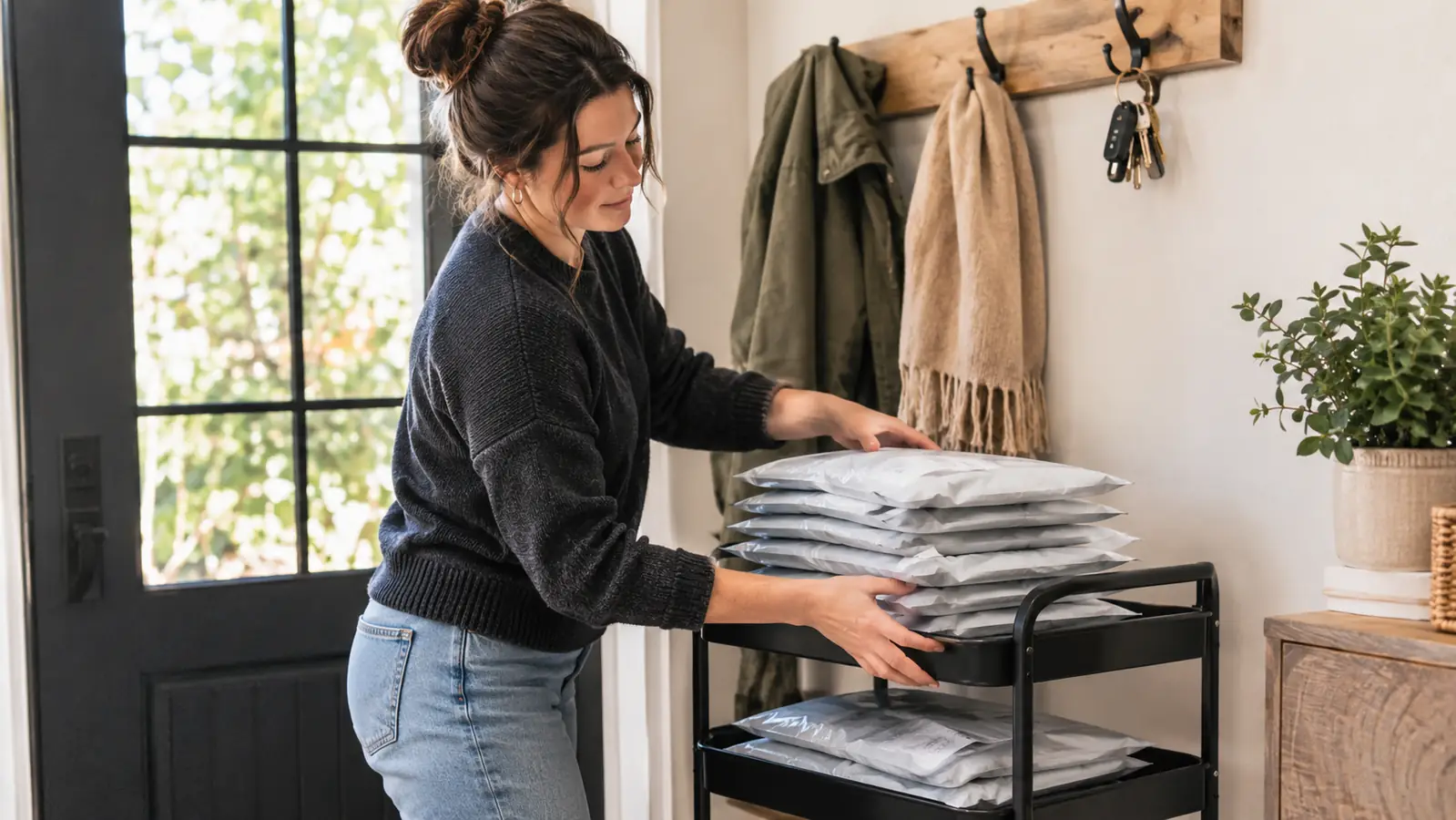
The METRONIC 100 pack is the size I buy. It arrives as a flat brick and goes under the folding table in the packing room, out of the way, taking up nothing. Boxes do not do that. Boxes take shelf space, and shelf space in my spare bedroom is already spoken for by inventory that has to sit somewhere until it sells. Any supply that gives me back a shelf in that room earns its spot. That sounds small until you have stacked forty flattened boxes against a wall for a month.
Tear resistant is not the same as puncture proof
These bags are tear resistant, and it is worth being precise about what that buys you. A thrifted denim jacket with a metal button, or a purse with a hard corner, can still poke through. I fold those with the hardware turned inward, and if something is genuinely sharp I add a layer of bubble wrap and take the extra ounce. Knowing where the limit sits is what saves you the angry message. A poly mailer that fails, fails at one point and fails loudly.
Dust resistant, which sounds silly until you see my shelving
Inventory sits on wire shelving for weeks in that room, sometimes months. It gets dusty. Folded clothing left out collects it, and clothing that smells like a spare bedroom does not photograph well and does not sell well. Because these are dust resistant, the mailer does double duty as storage. I pack the item when I list it, mark the bag with a sticky note, and shelve it. When it sells, most of the package is already built and I am just printing a label.
It takes a load off the post office run
My husband Gary carries the outgoing packages out to the car and in to the drop off. That is the arrangement, and I try not to make it a chore. A bag of clothing orders is a fraction of the weight of the same orders in boxes, and it goes in one trip instead of a balancing act with a stack that wants to slide. Nothing about that is dramatic. It is just easier on both of us, and easier is part of what keeps a part time reselling habit running for six years.
Buyers get in with two hands instead of a knife
A box has to be cut open. People cut too deep and slice what is inside, and then you are filling out a damage report over a shirt that was not worth the argument. A poly mailer tears along the seam. I get far fewer messages about items damaged in transit now, and that is the kind of improvement that does not show up anywhere until you have gone a whole year without one. It also means less cardboard going out to the bin every week.
What I'd Skip
I still keep boxes, and I would tell anyone starting out to keep a few too. Shoes that come in their own box go in a box, because a squashed shoebox is a returned shoe and no bag is worth that argument. Anything glass or ceramic from the housewares side of my inventory gets a box and padding, every time. A hardcover book lot heavy enough to strain the seams wants cardboard. And if a garment will not fold flat, the mailer was the wrong tool and forcing it just moves the problem to the buyer. The METRONIC mailer is right for clothing, soft goods, and anything that can bend a little. It is not a universal replacement, and a seller who treats it like one will eat returns. If you want the honest version: this is one good tool in a room that still needs three or four others.
One size, one shelf, one less thing to think about at 7am
Start with the 100 pack of METRONIC 10x13 self sealing mailers and count how many boxes you stop buying for clothing.
Amazon See the METRONIC Poly Mailers on Amazon →